
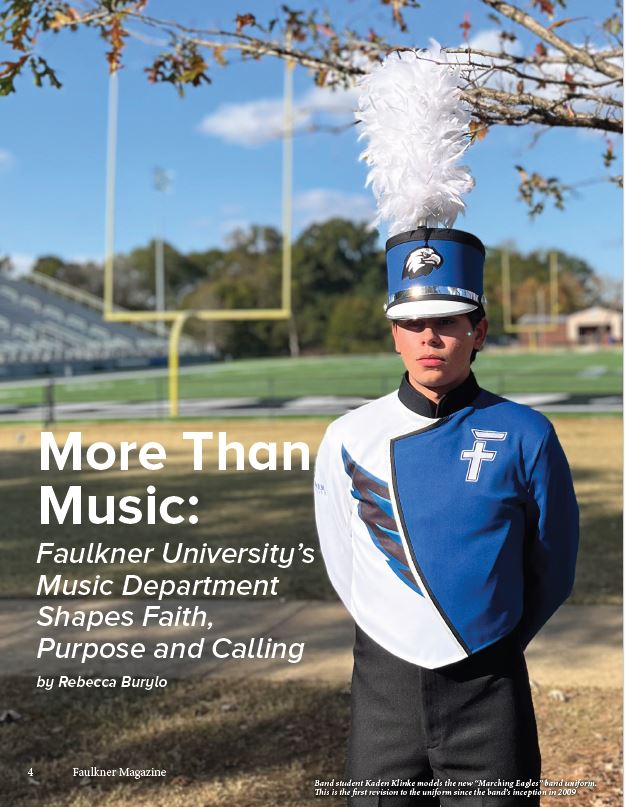
If a greater knowledge of music and the arts is the only thing a student walks away with after graduating from Faulkner University’s music department, then something has been missed.
At its core, the mission of Faulkner’s Department of Music, housed within the Alabama Christian College of Arts and Sciences, goes far beyond notes, rhythms and performances. The department exists to cultivate faithful servants of Jesus Christ, using music as a powerful means of connection, ministry and transformation.
“Music is a means by which to be in touch with our students and their lives,” said Art Williams, chair of the Department of Music. “I love to tell students, ‘I care that you know what a quarter note is, but I care so much more about the kind of person you are becoming and that you are growing in Christ.’”
After years of learning music in secular educational settings, Williams came Alabama Christian Academy (ACA) to teach and later joined Faulkner’s Department of Music. It was at ACA that he discovered a deep passion for Christian education and the opportunity to shape students both musically and spiritually.
He described music as a universal language and a natural avenue to introduce people to Christ.
“Who doesn’t like music?” Williams said. “It’s one of the few ways we can all connect. That’s why the world needs more Christian musicians and artists.”
That philosophy defines the culture of Faulkner’s music program. Small class sizes allow faculty to provide individualized instruction while fostering spiritual growth, meaningful relationships and a supportive environment grounded in faith. Professors invest deeply in students’ lives, helping them succeed not only as musicians but as people seeking to honor God.
“My favorite moments are when students come to my office, and we end up talking about things happening in their lives,” Williams said. “Some have experienced very difficult things. We get to have real, life-changing conversations, and my advice is always the same: You can’t lose obeying God. No matter the circumstance, there’s no way you lose by being faithful to Him.”
That care and connection resonate strongly with students and form the foundation of Faulkner’s music educational offerings in music.
Preparing Music Educators With Purpose
The Bachelor of Music Education is a four-year degree designed for students pursuing a career in teaching music with each course integrating a Christian worldview, equipping graduates to enter classrooms prepared both academically and spiritually. Offered collaboratively by the Department of Music and the College of Education, the program emphasizes strong musicianship alongside educational philosophy and best practices for the classroom. Students may focus on choral music, instrumental music or both, while preparing for teaching certification for PreK through 12th grade.
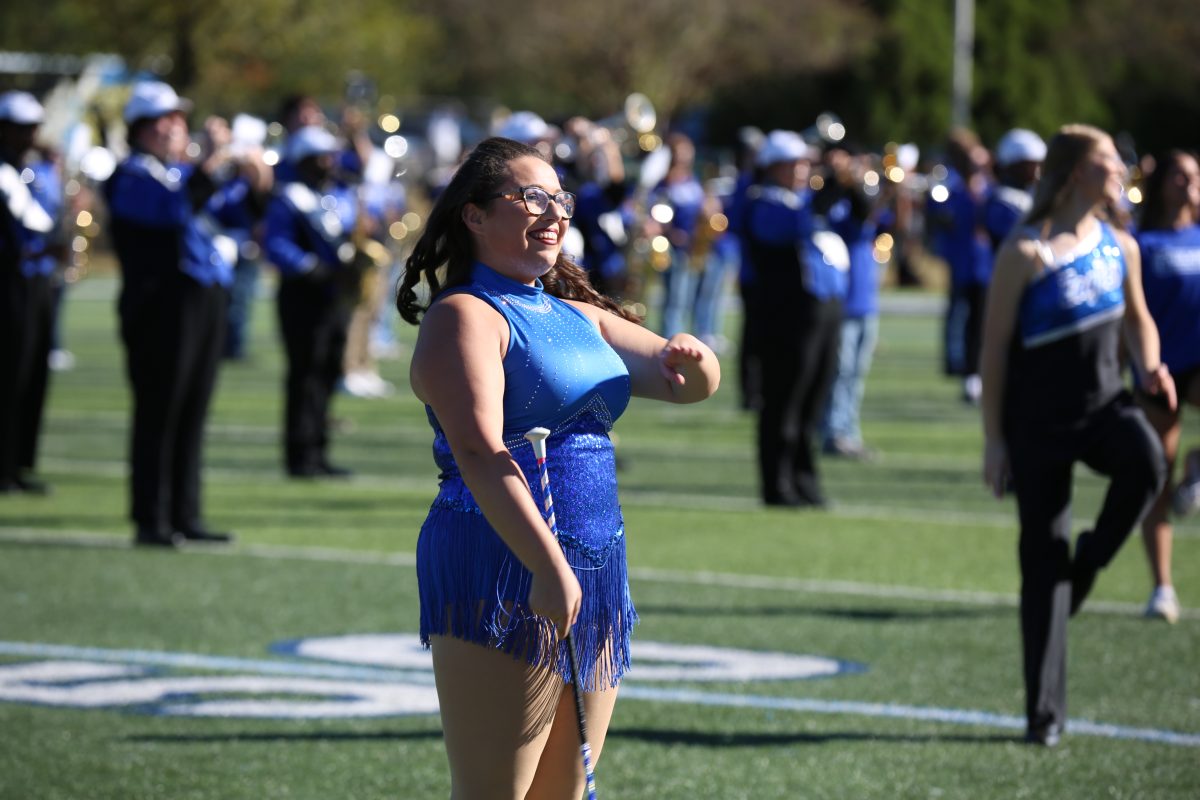
Music education majors participate in the Faulkner National Association for Music Education (NAfME) student chapter and attend the Alabama Music Educators Association Conference every year. Choral students participate in a regional tour every spring, while instrumental majors perform at all home football games during marching season and present multiple concert band performances each spring.
Students attend conferences annually, network with professionals in the field and develop leadership skills that serve them long after graduation.
The Bachelor of Arts in Music is designed for students seeking advanced musical training without a teaching certification and includes concentrations in vocal or instrumental music. Coursework includes music theory, sight-singing and ear training, music history, conducting, orchestration and arranging. Students receive weekly private instruction on their primary instrument, perform daily in ensembles and complete a professional internship during their final semester. These experiences allow students to gain firsthand knowledge of careers in music in settings such as recording studios, churches, high school bands and choruses and other professional music environments.
Performance opportunities mirror those of music education majors, including national travel, concert performances and ensemble participation by audition.
The Minor in Music allows students from other academic disciplines to pursue music-related studies by completing a minimum of 18 credit hours, including six upper level courses. The minor requires at least two hours of private instruction and two semesters of ensemble participation, with course selections approved by the department.
Building Community Through Music
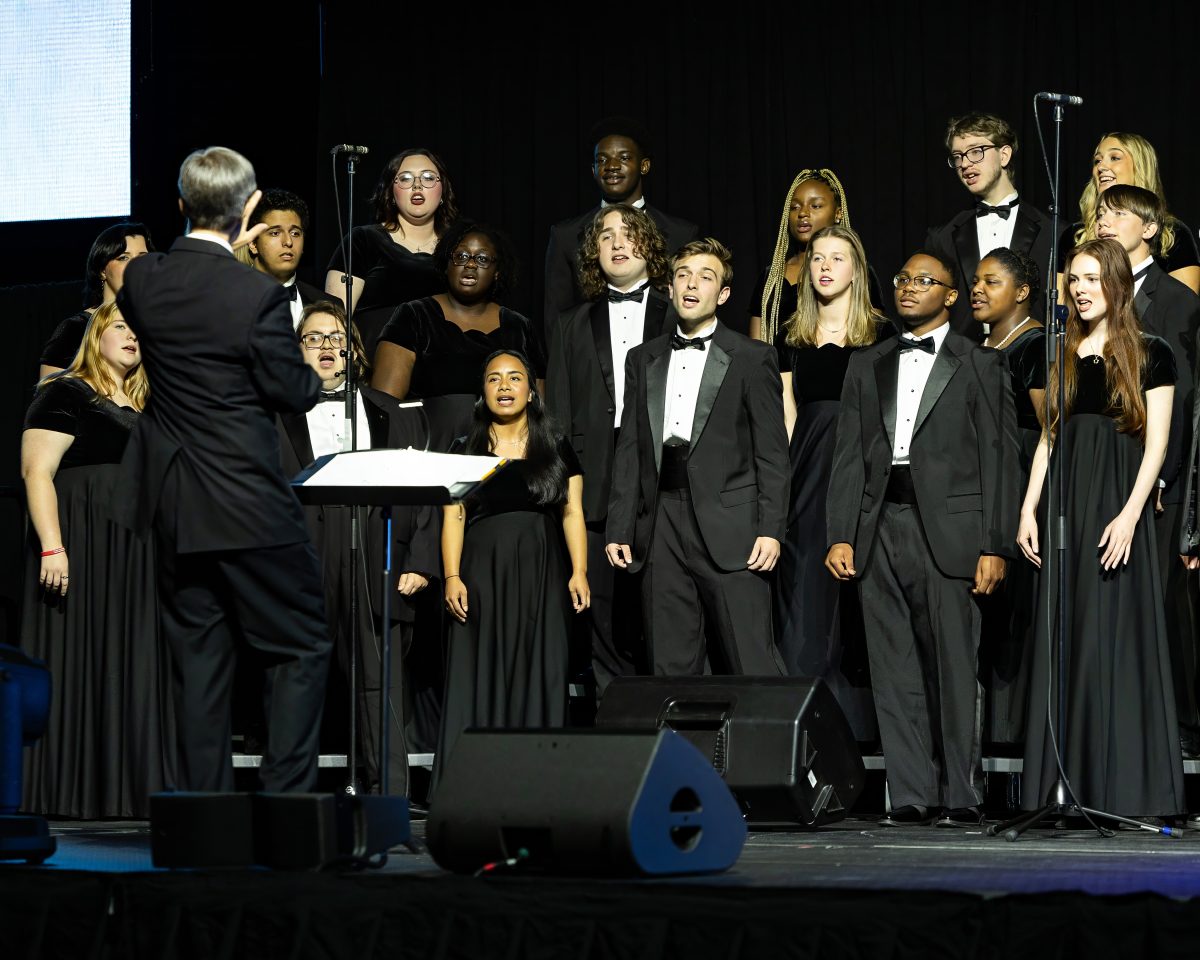
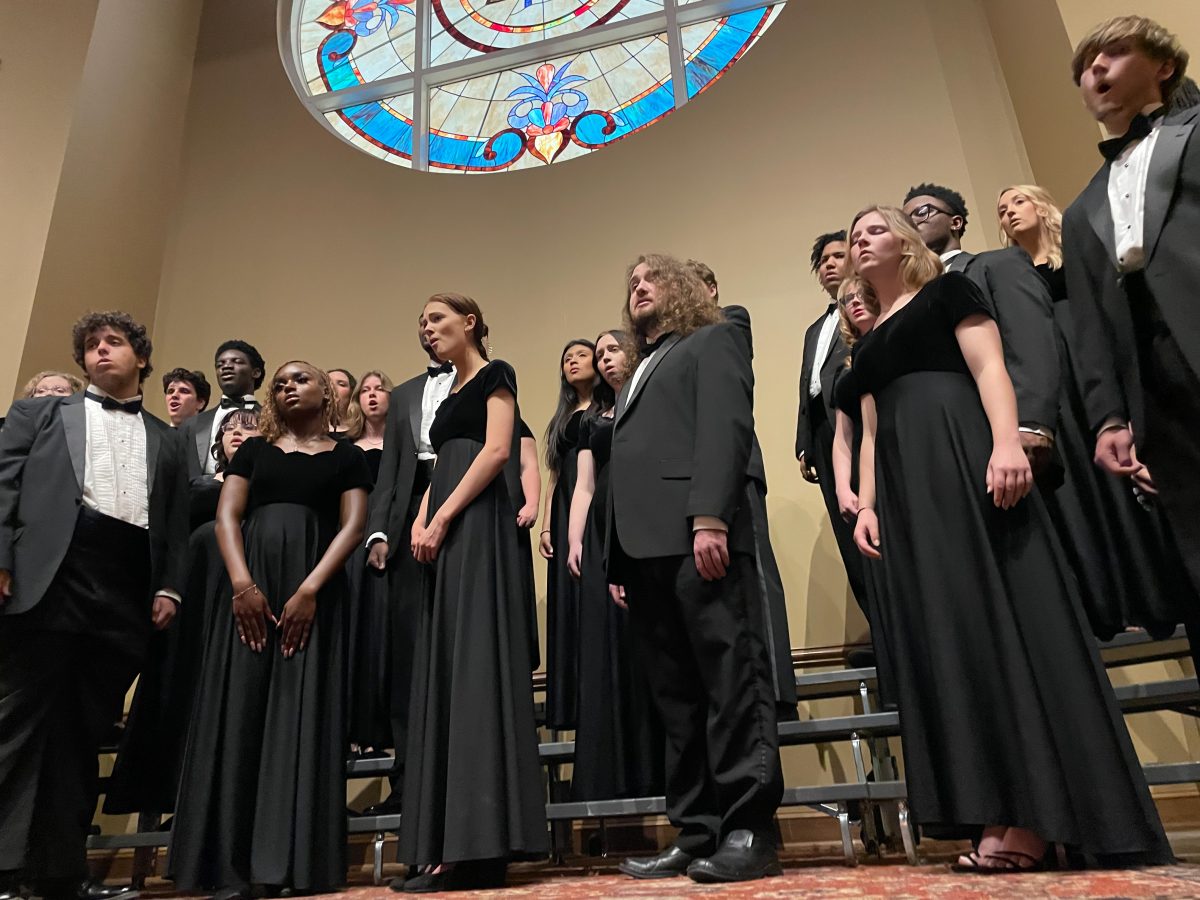
Music scholarships are available annually to students who participate in Faulkner’s ensembles, and a music major is not required to qualify. Auditions are required for all music students and are offered on multiple dates each year to accommodate prospective students. Performance opportunities abound through ensembles including Faulkner University Chorus, Faulkner Singers, Eagles Marching Band, Concert Band and the Faulkner Swingin’ Eagles Jazz Ensemble. Choral students often tour nationally, performing at schools and churches from Texas to Washington, D.C., and have the opportunity to perform for world-renowned dignitaries at Faulkner’s annual Benefit Dinner.

Before admission as music majors, students complete a theory placement exam and an audition on their primary instrument. Degree candidates also fulfill recital, jury and concert attendance requirements, complete a senior recital and pass proficiency and field exams.
A Calling Rooted in Faith
Whether students pursue teaching, performance or ministry, Faulkner’s music program emphasizes calling over career and service over self.
“Our goal is not just to graduate musicians,” Williams said. “It’s to graduate people who love God, love others and use their gifts to serve.”
At Faulkner University, music is not simply studied or performed. It is lived, shared and offered as a testimony of faith.