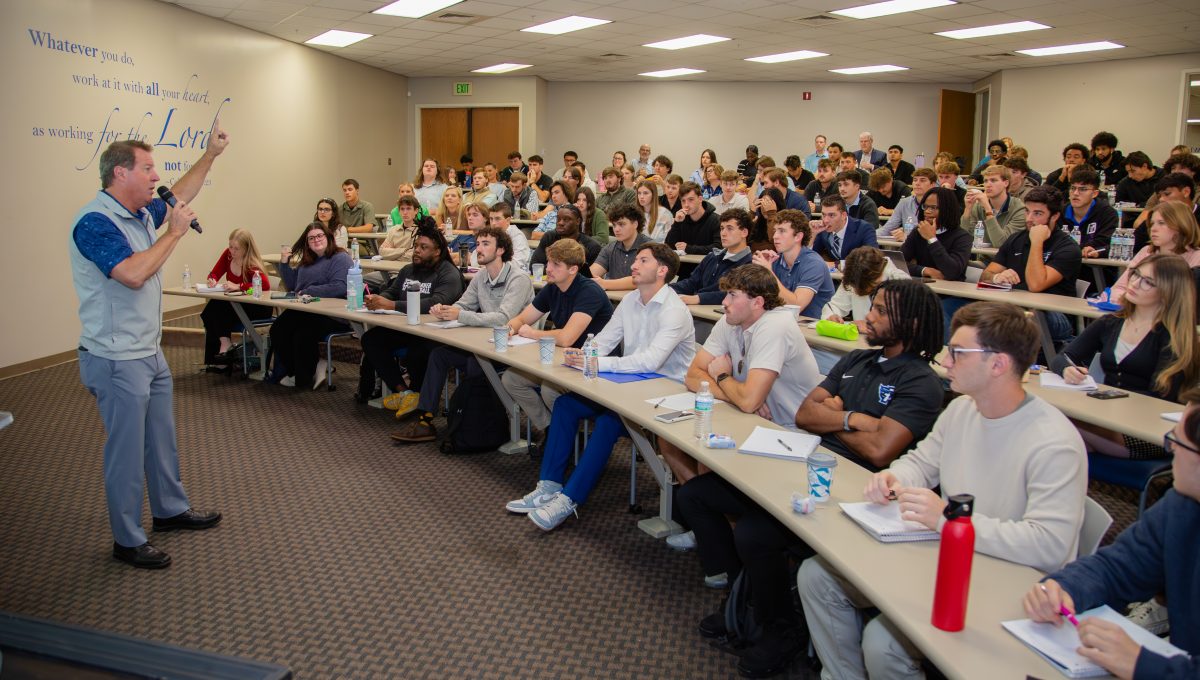
In a world where stories of corporate corruption dominate headlines, the need for ethical leaders has never been greater. Faulkner University’s Harris College of Business and the Khadanga School of Executive Education is taking a proactive role in addressing this challenge through its Ethics Institute, which blends biblical principles with contemporary research in ethics.
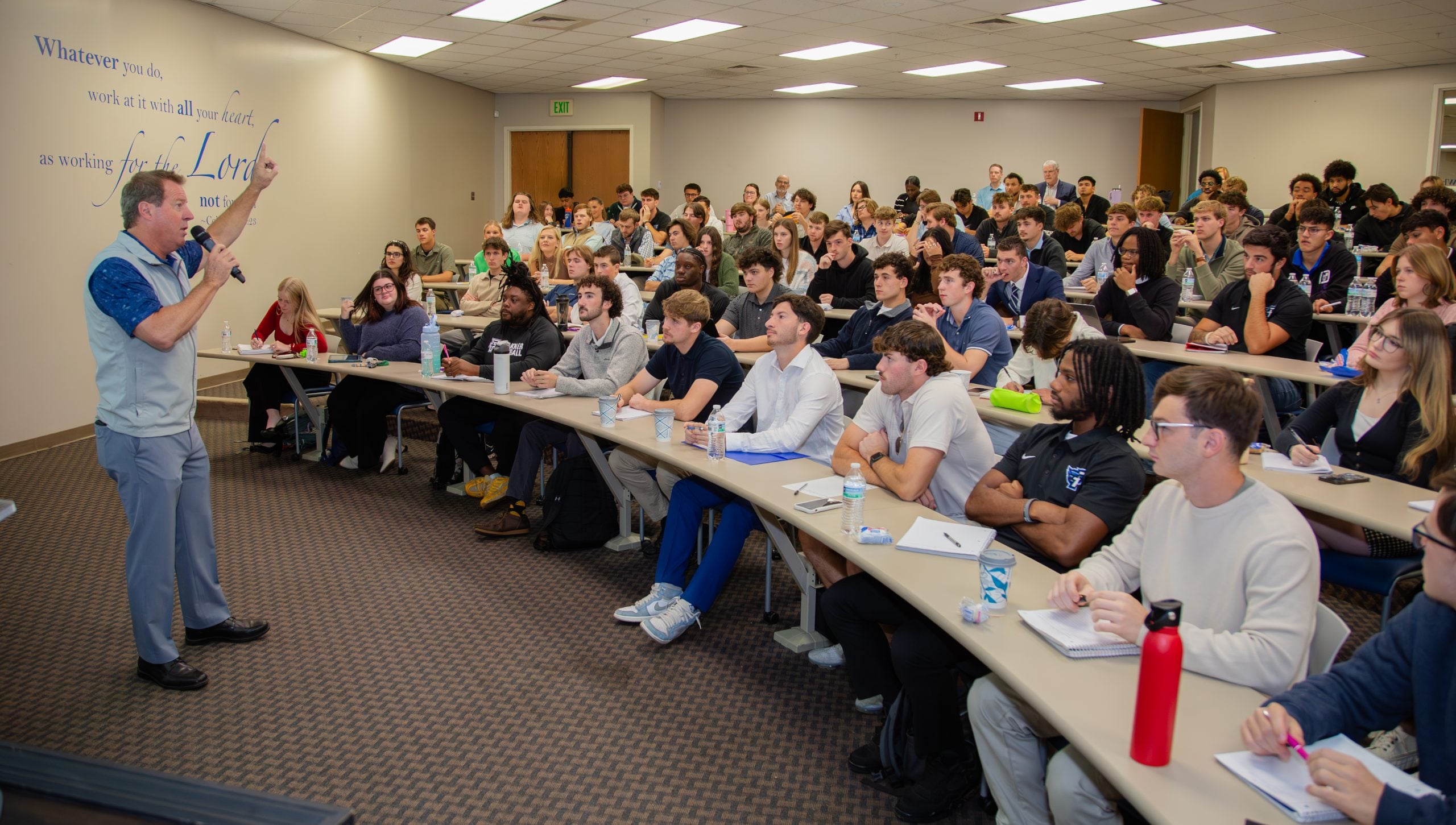
“With Colossians 3:23 as the foundation, we encourage our students to be men and women of high moral character and integrity,” said Harris College of Business Dean Justin Bond. The verse reads, “Whatever you do, work at it with all your heart, as working for the Lord, not for men.”
The mission is clear: prepare graduates who can stand firm in their convictions, make principled decisions, and serve as ethical leaders in today’s business landscape. The Ethics Institute equips students with practical tools for ethical decision-making, guided by the ultimate model for moral and ethical behavior—Jesus Christ.
Learning from Real-World Role Models
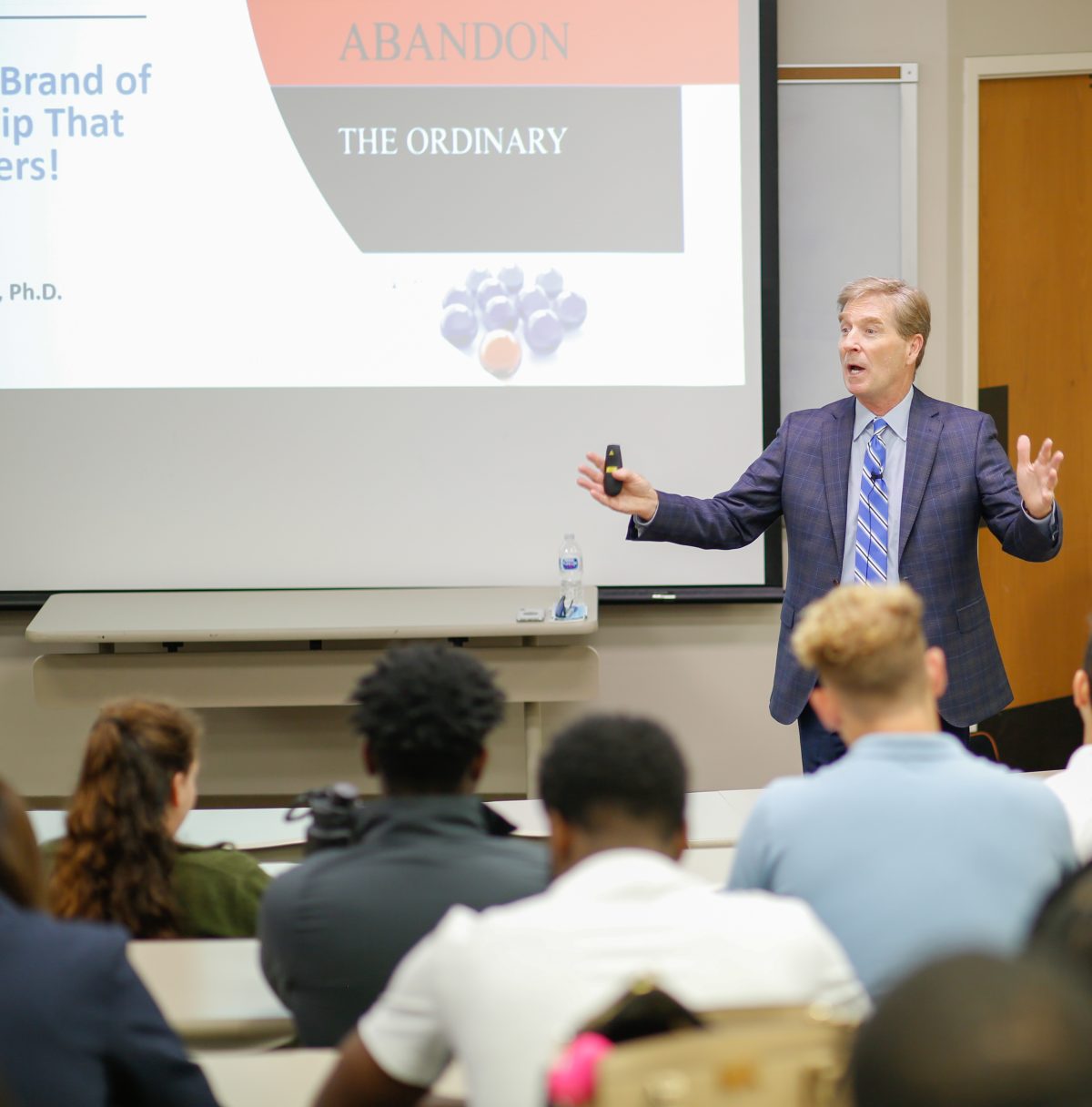
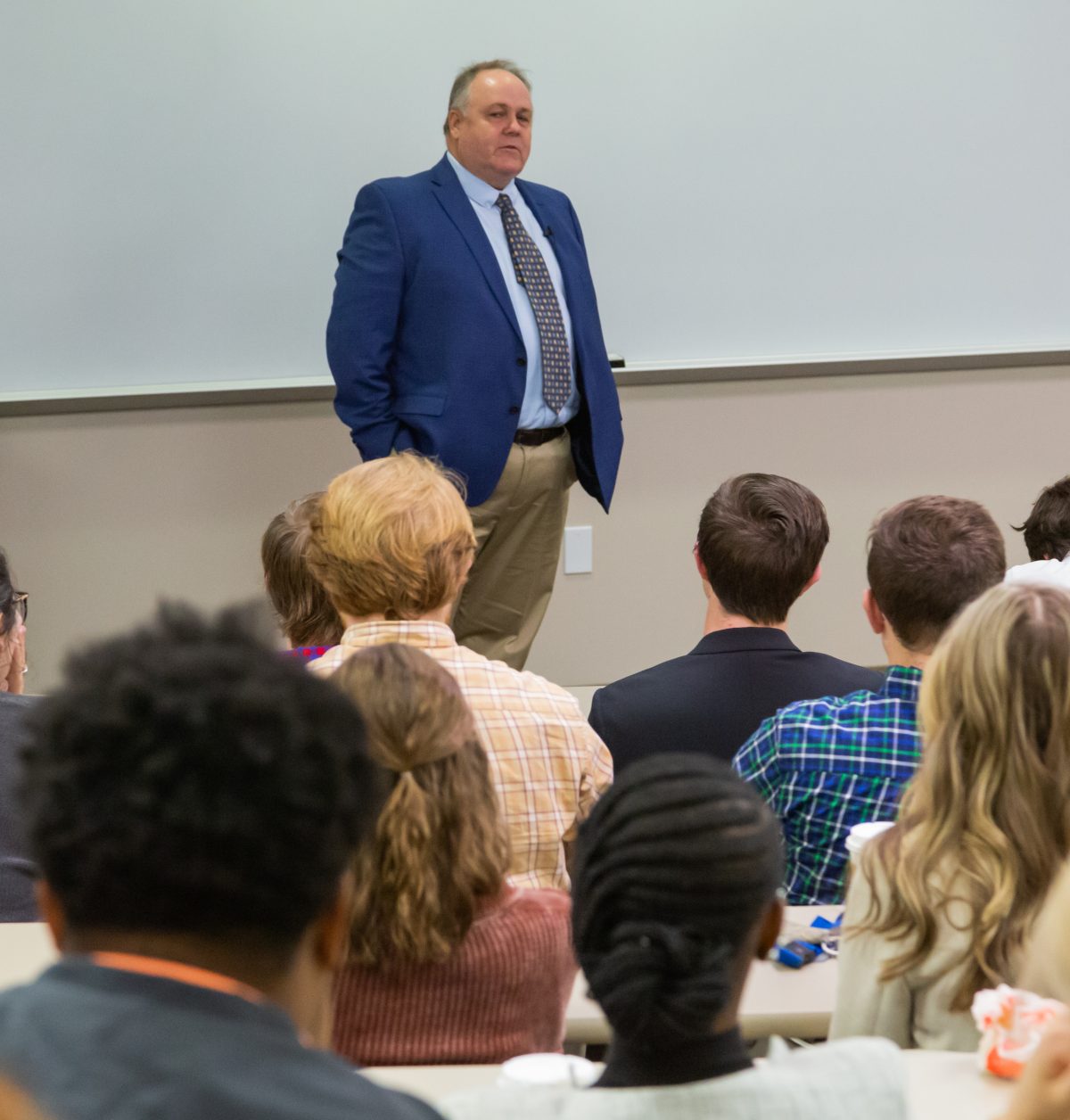
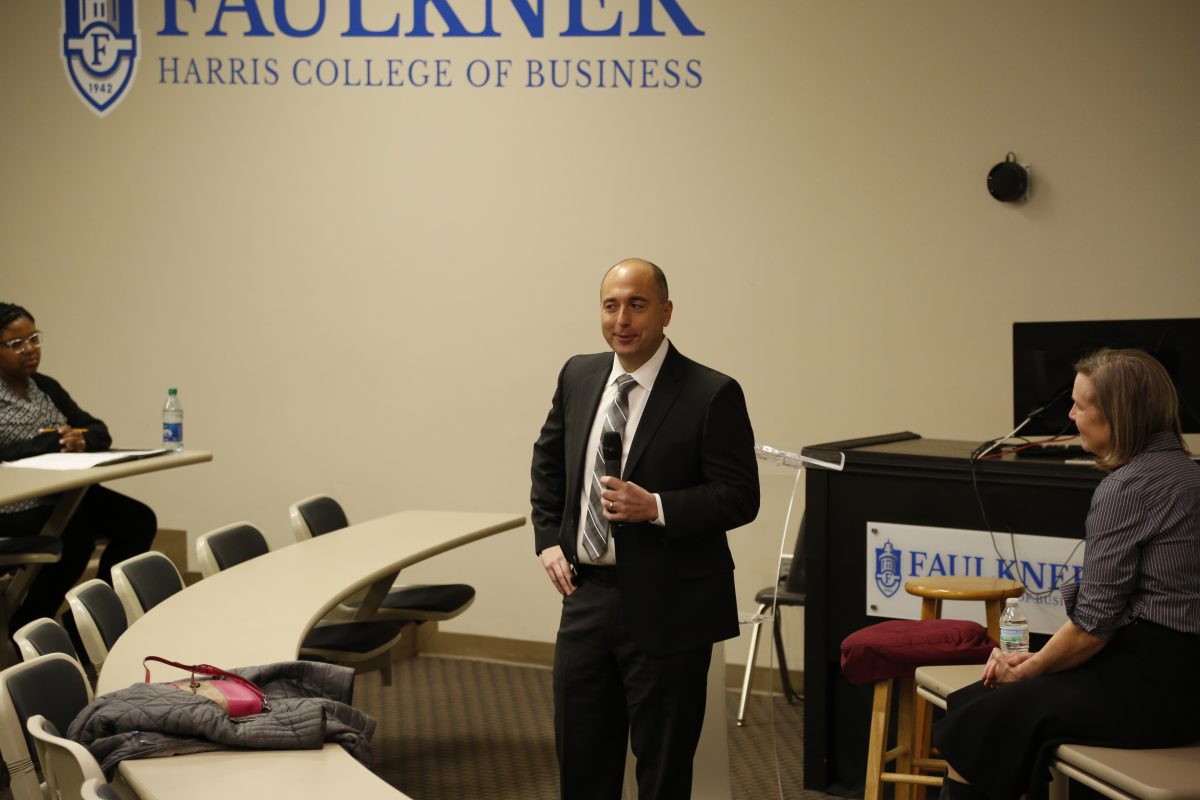
One of the most impactful aspects of the Ethics Institute is its speaker series, which brings in distinguished business leaders to share their experiences, leadership philosophies, and the ethical challenges they have faced.
Past speakers have included:
- Dr. Rick Lytle, president and CEO of the CEO Forum (Fall 2021)
- Mitch Henry, Faulkner University’s ninth president (Spring 2022)
- Mike Eubanks, vice chairman of Faulkner’s Board of Trustees and vice president of Gulf Hauling and Construction (Fall 2022)
- John Gordon, Faulkner alumnus and financial adviser with Edward Jones (Fall 2022)
- Tom Pendley, president and CEO of Mannington Mills (Spring 2023)
- Paul Evans, partner with CRI Advisers, LLC, and CRI M&A Advisors, LLC (Fall 2023)
- Bill Trick, CEO of IMS Communities (Spring 2024)
- Jason Isbell, Faulkner alumnus, board member, and vice president of state government affairs at Regions Bank (Fall 2024)
- Anne Ostholthoff, vice president of corporate social responsibility at AssuranceAmerica, and
- Eric Martinez, associate general counsel at AssuranceAmerica (Spring 2025)
- Al Crosby, president at Crosby Electric (Fall 2025)
Fall 2024 speaker, Jason Isbell, who has served as the senior vice president of state government affairs and economic development at Regions Bank for the last five years, said the Ethics Institute is an essential and unique component of a business major’s education.
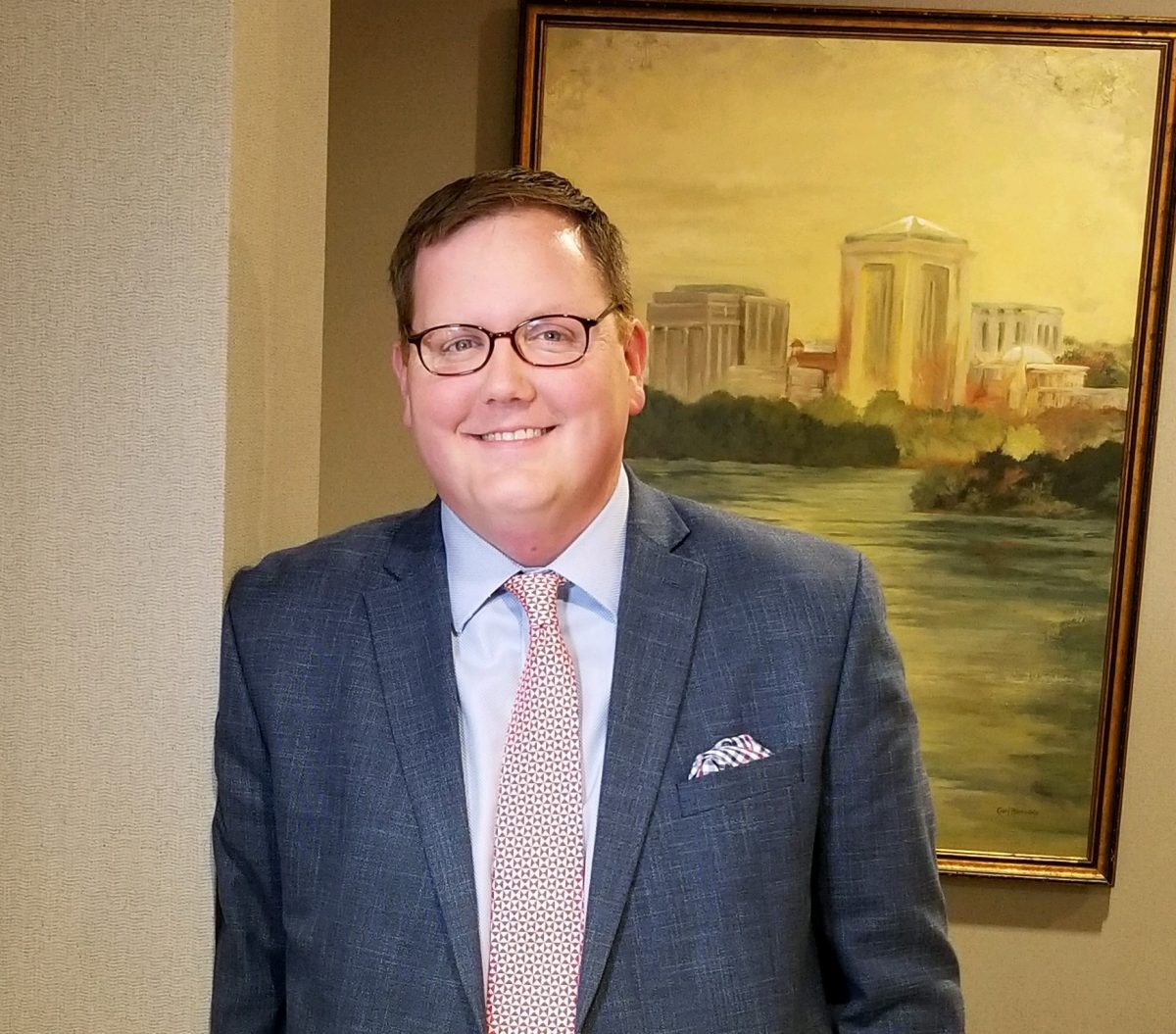
“Any business school can offer classes on accounting, marketing, and management, but the Ethics Institute is one of the things that sets Harris College of Business apart from all the rest,” Isbell said. “Learning the ‘nuts and bolts’ of the business world is important, yet today’s job creators crave trustworthy employees who will represent themselves with integrity and character. That type of learning is woven into Faulkner’s mission, and in my opinion, our business school alums are more marketable in the workplace because of the Ethics Institute.”
Since graduating from Faulkner in 2002, Isbell’s professional career has revolved around politics, banking and legal fields that do not always have the best reputation when it comes to ethics and integrity, he said.
“I’ve worked diligently to try and maintain a reputation as an honest broker and have worked long enough to know that ‘The Golden Rule’ is the best way to operate. Even when I’ve fallen short, keeping that goal front-and-center has been my professional standard, and it has served me well,” Isbell said.
Ethical instruction at Faulkner is not limited to special events. Business ethics is integrated into the curriculum across disciplines, including accounting, finance, management, marketing, risk management, and information systems. Students explore real-world scenarios through lectures, videos, and case analyses, giving them the chance to practice applying ethical principles to industry-specific challenges.
Isbell encouraged business students as they prepare to graduate.
“You can’t reach the top of the ladder without stepping up on the bottom rung,” he said. “Business majors entering the workforce must have the humility to do hard work, the patience to do it as long as it takes and the character to do it well.”